
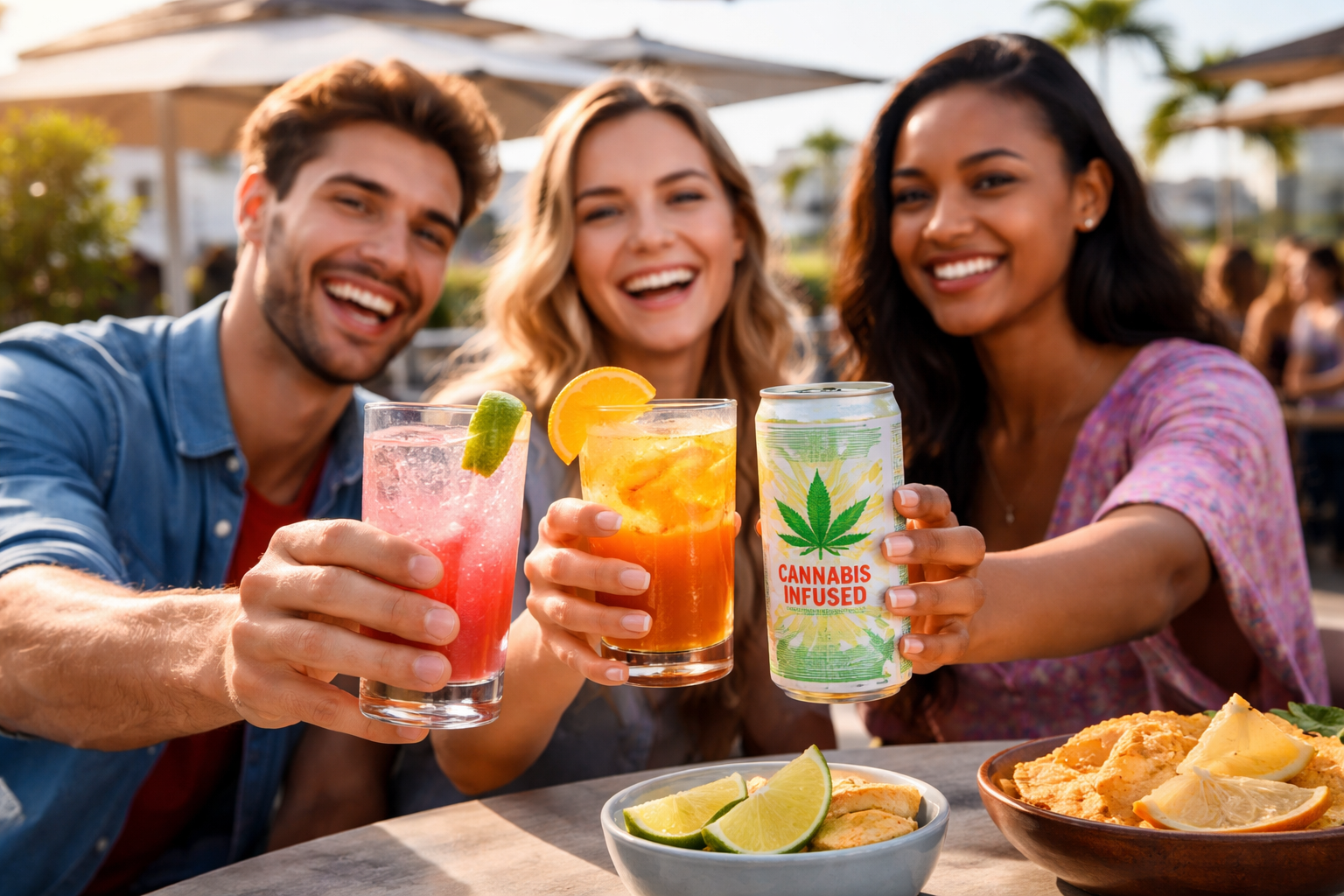
Cannabis-infused drinks could be more than just a trend — they might actually help people cut back on alcohol and reduce alcohol-related harm. That’s the conclusion of a new study examining why and how people are choosing THC beverages over traditional alcoholic drinks.
Alcohol has long been linked to a wide range of health problems, from liver disease to accidents and injuries. Public health experts have been searching for realistic ways to reduce its impact, and this new research suggests cannabis drinks could play a role in that effort.
According to researchers from the State University of New York at Buffalo, people who consume cannabis-infused beverages often use them as a replacement for alcohol rather than alongside it. In many cases, that switch leads to noticeable changes in drinking habits.
Participants who drank cannabis beverages reported consuming fewer alcoholic drinks per week and binge drinking less frequently. These changes could potentially result in fewer health problems, less risky behavior, and fewer negative consequences associated with alcohol use.
What the Study Reveals
The study, published in the Journal of Psychoactive Drugs, surveyed 438 adults who had used cannabis in some form during the past year. About one-third reported consuming cannabis beverages specifically. What stood out was how often these users intentionally chose cannabis drinks instead of alcohol.
Nearly 59% of cannabis beverage users said they substituted cannabis for alcohol, compared to about 47% of people who used other cannabis products like flower or edibles. This suggests there may be something unique about beverages that makes them a more natural alternative to beer, wine, or cocktails.
Patterns of binge drinking were also different. More than 80% of cannabis drink consumers fell into a lower-risk drinking category compared to non-beverage cannabis users. Many also reported a decline in alcohol consumption after starting to use THC drinks.
A Shift in Social Drinking Culture
Lead researcher Dr. Jessica Kruger described the findings as the first to frame cannabis as a harm-reduction tool specifically for alcohol. While cannabis has previously been discussed as a safer substitute for substances like opioids, it has received far less attention when compared to legal drugs such as alcohol.
As cannabis-infused beverages continue to enter legal markets, interest in their role as an alcohol alternative is growing. These drinks offer familiar social rituals — sipping, relaxing, and socializing — without some of alcohol’s well-known downsides.
The study arrives at a time when attitudes toward drinking appear to be changing. Recent polls suggest many Americans are cutting back on alcohol and tobacco, while fewer feel the need to give up cannabis entirely.
Other studies support this trend as well. Research has found that people who use cannabis often drink less alcohol overall, and cannabis regulators tend to place a stronger emphasis on public health than agencies regulating alcohol.
Even large venues are starting to take notice. The United Center in Chicago recently announced plans to offer hemp-derived THC beverages at concerts and live events, giving adults another option besides alcohol.
While researchers stress that more studies are needed before cannabis drinks can be seen as a mainstream public health solution, the early signs are promising. For people looking to reduce their alcohol intake without giving up social experiences, cannabis-infused beverages may offer a new and potentially safer alternative.