
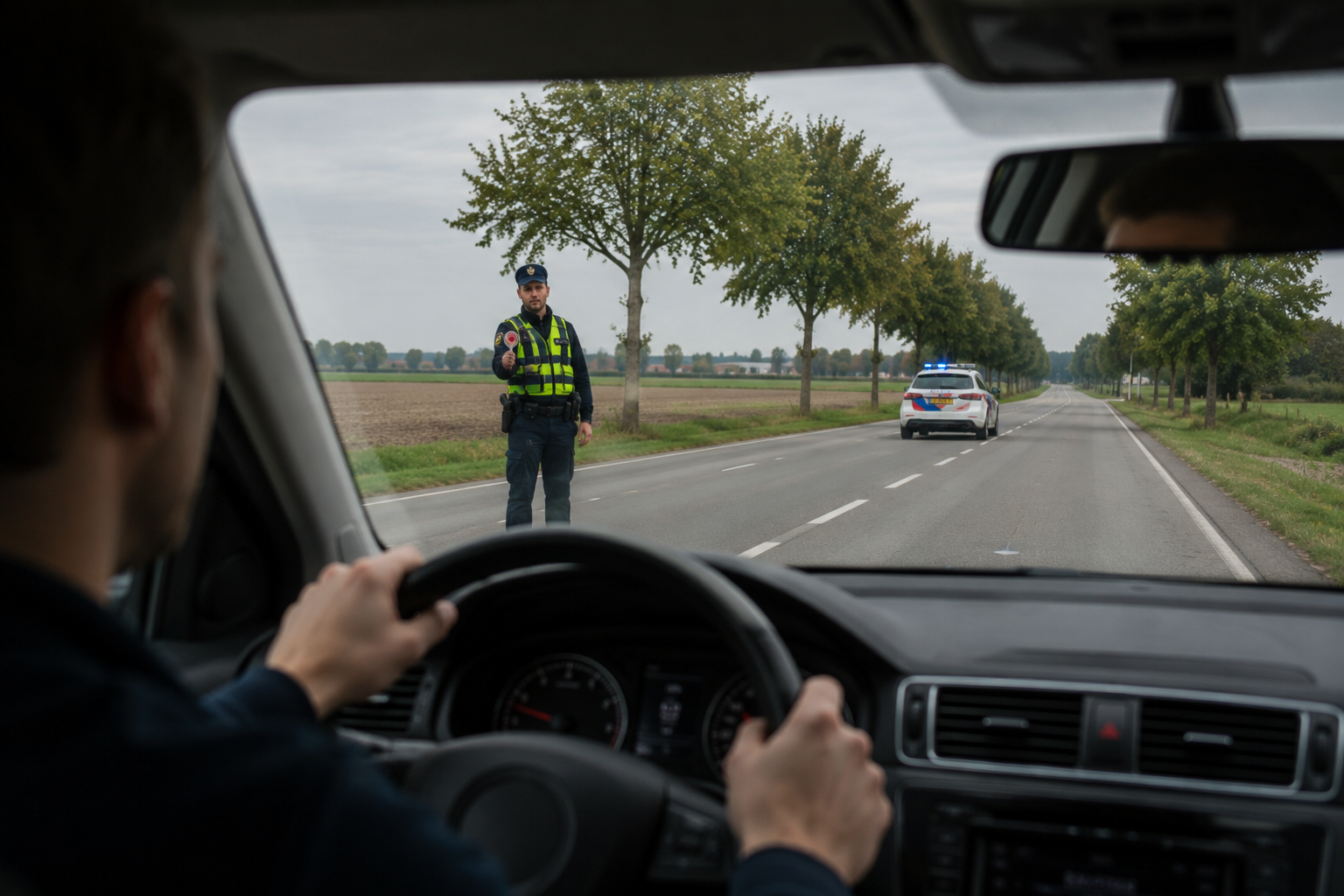
As cannabis legalization continues to expand across the United States and Europe, lawmakers and law enforcement agencies are facing a growing challenge: how can authorities accurately determine whether someone is impaired by cannabis while driving? Unlike alcohol, THC behaves very differently in the human body, making roadside testing significantly more complicated.
Now, a newly published federally funded study may represent an important breakthrough in cannabis detection technology. Researchers from Virginia Commonwealth University have developed a portable THC breath-testing device that could eventually function similarly to traditional alcohol breathalyzers.
A Portable THC Detection Device
The study, funded in part by the United States Department of Justice, focused on creating a low-cost, portable solution capable of detecting Delta-9 THC in human breath without requiring laboratory analysis.
The device itself is surprisingly compact and resembles a small asthma inhaler. Using 3D-printed cartridges combined with a chemical dye system known as “Fast Blue,” researchers were able to detect cannabinoids including THC, CBD, and CBN through visible color reactions.
According to the study, the device successfully detected cannabinoid levels between 10 and 100 nanograms. Different cannabinoids produced different color patterns, allowing researchers to distinguish THC from non-intoxicating compounds such as CBD.
The researchers described the results as a strong “proof of concept” for future roadside cannabis testing technology.
Why Cannabis Breath Tests Are Difficult
Developing an accurate THC breathalyzer has proven far more complicated than creating alcohol breath tests. Alcohol leaves the body relatively quickly, and blood alcohol concentration closely correlates with intoxication levels. THC, however, behaves differently.
Cannabinoids can remain detectable in blood, urine, saliva, and even hair for days or weeks after use — long after any psychoactive effects have disappeared. This makes it difficult to determine whether someone is currently impaired or simply used cannabis in the past.
Researchers involved in the project acknowledged this challenge. Existing THC testing methods often require expensive laboratory equipment and still struggle to accurately measure real-time impairment.
The study specifically aimed to avoid some of these issues by focusing on fresh breath samples and colorimetric detection methods that could eventually be used directly at roadside stops.
Growing Demand for Reliable Roadside Testing
As more regions legalize cannabis for medical or adult use, governments are increasingly searching for reliable ways to address impaired driving concerns.
Several U.S. states have introduced legal THC limits for drivers, similar to blood alcohol laws. However, many scientists continue to question whether THC concentration alone can accurately measure impairment.
Previous federally funded research from National Institute of Standards and Technology and the University of Colorado Boulder concluded that there is currently no clear scientific consensus linking specific THC blood levels to driving impairment.
Other studies have shown that regular cannabis consumers can maintain elevated THC levels in their systems even when completely sober. Meanwhile, occasional users may experience stronger impairment with lower THC concentrations.
These scientific uncertainties have fueled ongoing debates around cannabis DUI laws and roadside enforcement.
The Future of Cannabis Detection
While the new device is still in the early development phase, researchers believe it could eventually become an affordable and practical tool for law enforcement and public safety agencies.
The team has already filed a patent application for the technology and hopes future testing will improve accuracy and field usability. If successful, the device could represent one of the first truly portable THC breath-testing systems capable of providing immediate results without additional laboratory processing.
As cannabis policy continues evolving worldwide, technologies like this may play a key role in balancing legalization, public safety, and scientific accuracy in the years ahead.